
Upgrade How You Speak, Listen, and Connect
We spend years learning how to read and write, but rarely are we taught how to truly communicate. Good communication skills help us speak with clarity, listen with intent, and connect meaningfully.
When a team member shares thoughts about their role, suggests changes, or offers ideas for the organization, respond with genuine curiosity. A simple “Tell me more” followed by thoughtful, open-ended questions can have an immediate and powerful impact. There might be some hesitation at first, especially if such conversations are rare at the workplace. But soon, people will open up. You may be surprised by the result.
Try “Curious Conversation” Instead of “Active Listening”
Most companies teach effective communication skills, but what they don’t teach is authenticity and being genuine. Authentically empathetic and curious people direct their attention to others, not to themselves. When we want a relationship to thrive, it’s more valuable to show genuine interest in the other person than to focus on being interesting.
Replace “Active Listening” with “Listening to Understand”
Listening to understand, rather than to respond, is rarely taught in traditional communication skills training. It requires being fully present, asking open questions, reflecting responses in your own words, and staying curious without judgment. Slow down, focus on the other person, and minimize distractions.
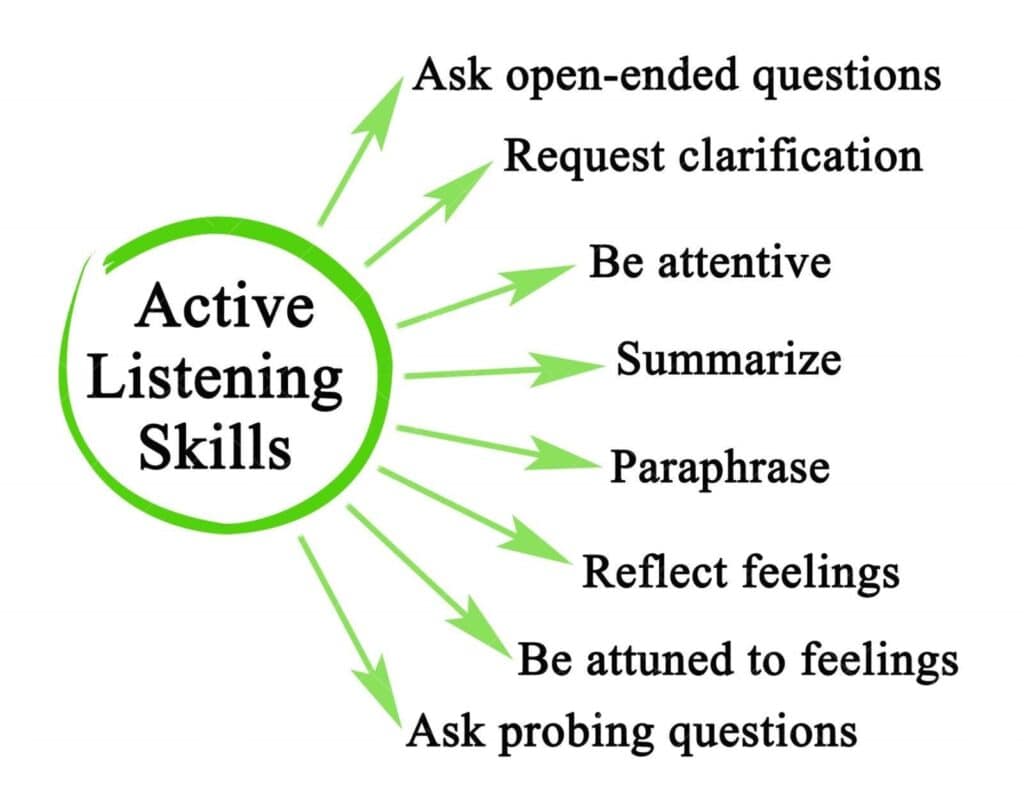
All the active listening skills shown in the image below become meaningless if they lack authenticity and genuineness.
Using the Right Type of Language
The language leaders use, both in written and verbal communication, directly influences their team. How they communicate in emails and interactions, such as one-on-ones and team meetings, shape how others behave. When managers become aware of this impact, they can act with greater intention and purpose.
Be Accurate in Reading Verbal and Non-Verbal Cues
Good leaders are often better at reading others. Those with empathetic curiosity can more accurately sense the levels of extraversion and openness in the people they interact with. This is likely because they are skilled at noticing both verbal and non-verbal cues. It helps them connect more easily with others, even with strangers.
Keep a Learning Mindset in All Interactions
Of all the tools in management, effective communication skills are arguably the most powerful. When you’re with others, do you tend to judge or stay curious? Think about your mindset when meeting a new employee, interacting with a stranger, attending a meeting, or socializing with peers.
Adopt a learning mindset in every interaction, with employees and customers alike. A learning mindset helps you accept different perspectives and improves conflict resolution. It encourages positive emotional expression, humor, playfulness, unconventional thinking, and a non-defensive attitude.
Great Communication Skills Start with the Right Questions
All the questions we ask fall into two categories. Whether they are about the world, other people, or ourselves, every question fits into one of these two types:
- Judger questions
- Learner questions
Judger questions reflect our default way of thinking. They are reactive in nature, stem from a fixed mindset, focus on blame, and often create a win–lose dynamic. Common examples include: “What’s wrong with me or them?”, “Whose fault is it?”, and “Why bother?”
Learner questions are the opposite of judger questions. They come from a growth mindset and are inherently uplifting. These questions encourage thoughtful choices, take a proactive approach, focus on solutions, and reflect a win–win attitude. Examples include: “What can I learn from this situation?”, “What assumptions am I making about the other person or the situation?”, “What are my choices?”, and “What options do I have?”
Good Communication Skills Help Leaders Ask the Right Questions
Closed questions prompt specific answers, often limited to a number, a value, or a simple yes or no. For example, asking “How much have you sold this month?” is a closed question. It invites a direct, factual response.
In contrast, open questions invite deeper, more thoughtful responses. Asking “What do you need to sell more?” can lead to a variety of replies, from venting frustrations to offering constructive ideas. The challenge with open questions is that they can steer the conversation in any direction, making them both powerful and unpredictable.
Four Reasons We Hesitate to Ask Questions—Even When We Should
- A fear of appearing ignorant or unintelligent.
- Being too preoccupied or overwhelmed to pause and reflect.
- Operating in a culture that discourages openness.
- Lacking the confidence or communication skills to frame effective questions.
Leaders should foster a work environment where candor is valued and employees feel safe to speak up without fear of backlash. Leaders should invest time in training their team members in essential communication skills. This includes developing the ability to ask the right questions.
Can I Ask a Better Question?
A study found that even in supportive workplaces, much of the help given isn’t useful. People often ask for help, but their requests are vague or unclear. When overwhelmed with information, they struggle to frame precise questions. They assume their needs are understood, even when they’re not. The root cause is a lack of communication skills training.
Fuzzy asks often prompt leaders to respond with questions like, “What do you need from me to move forward?” or “How can I help?” Before interrupting someone with a question, take a moment to pause and reflect. Ask yourself, “Can I frame this in a better way?”
As Peter Drucker rightly said, “The leader of the past knew how to tell; the leader of the future must know how to ask.”
What Are We Not Seeing in the Data?
One powerful question every leader should ask in meetings is: What are we not seeing in the data?
This question encourages openness and critical thinking. It pushes teams to look beyond surface-level numbers and explore deeper insights. Leaders learn to challenge assumptions, test new hypotheses, and prepare more thoroughly.
Asking this question has improved meeting quality, sparked fresh ideas, and led to better decisions. It has also revealed new opportunities for products, services, and up-selling.
Unleash the power of impactful conversations. Contact us today to equip your team with advanced communication skills that drive clarity, build confidence, and deliver results.